Afamin
Members
Principal Investigator (PI)
Florian Kronenberg , Hans Dieplinger
Co-PI
Barbara Kollerits , Claudia Lamina
Team
Bernhard Rupp
Association of afamin with metabolic syndrome and diabetes mellitus
On the basis of results of a study in transgenic mice overexpressing the human plasma protein afamin and revealing a metabolic-syndrome-like phenotype, we investigated a possible association between afamin concentrations and metabolic syndrome in three independent, population-based cohorts comprising >5000 participants of European ancestry. Plasma afamin concentrations were found to be consistently associated with both the prevalence and the incidence of metabolic syndrome (Figure 1). In particular, the association between afamin levels and metabolic syndrome was observed for all components of the syndrome. In a further study we investigated whether afamin concentrations are associated with prediabetes, type 2 diabetes, and insulin resistance. In a pooled analysis in >20,000 individuals we showed that afamin is strongly associated with insulin resistance, prevalence, and incidence of type 2 diabetes independent of major metabolic risk factors or parameters. We concluded that afamin might be a promising novel marker for the identification of individuals at high risk for the development of type 2 diabetes.
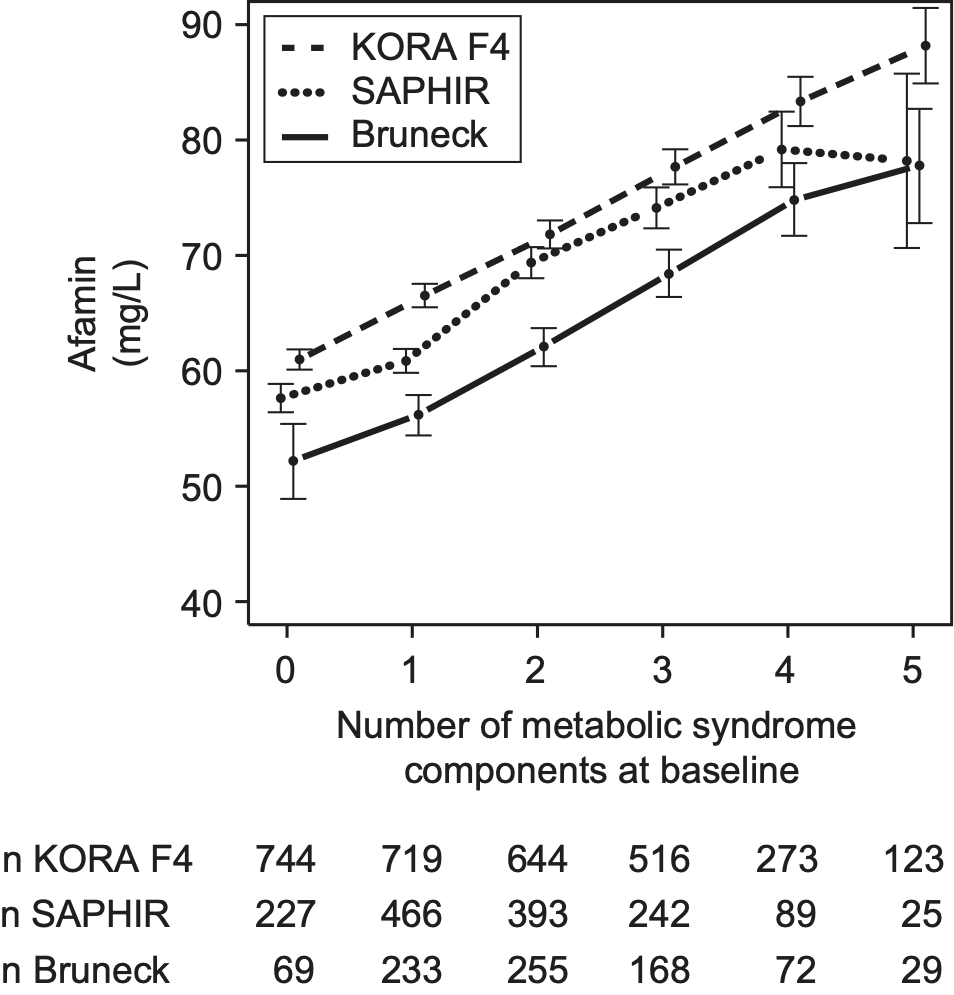
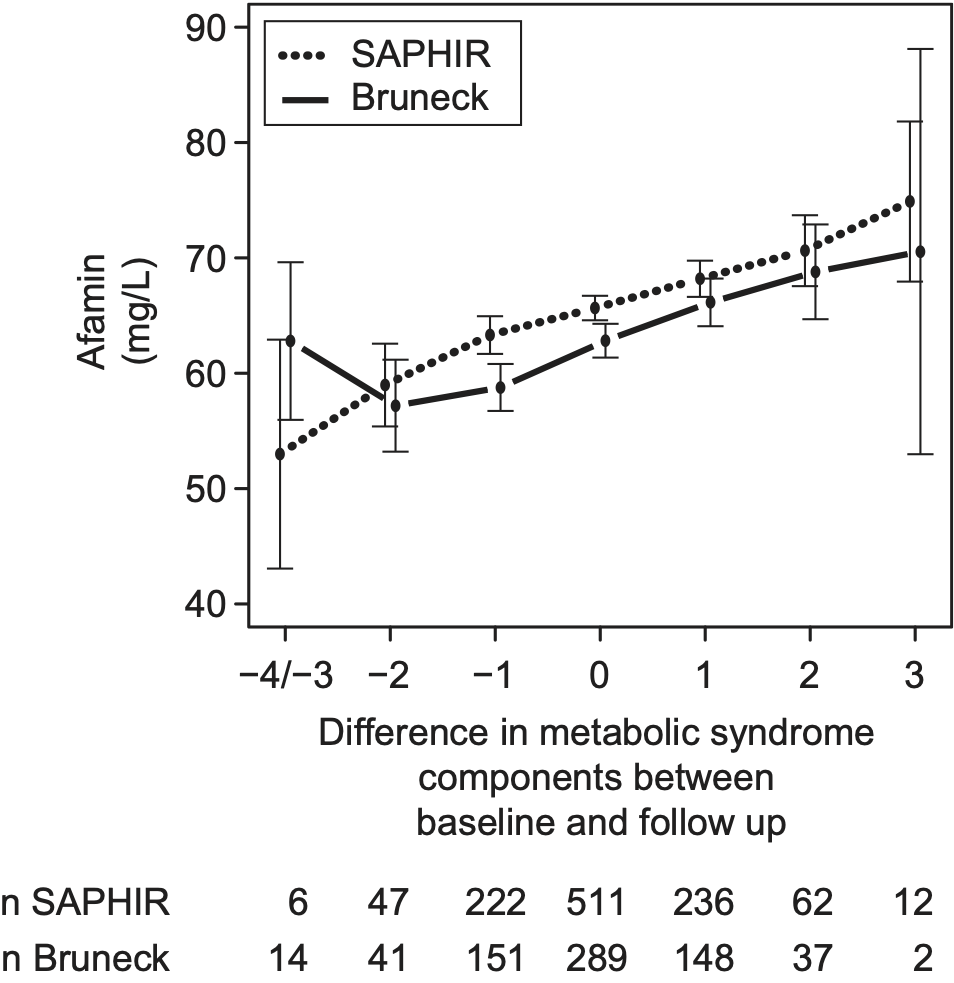
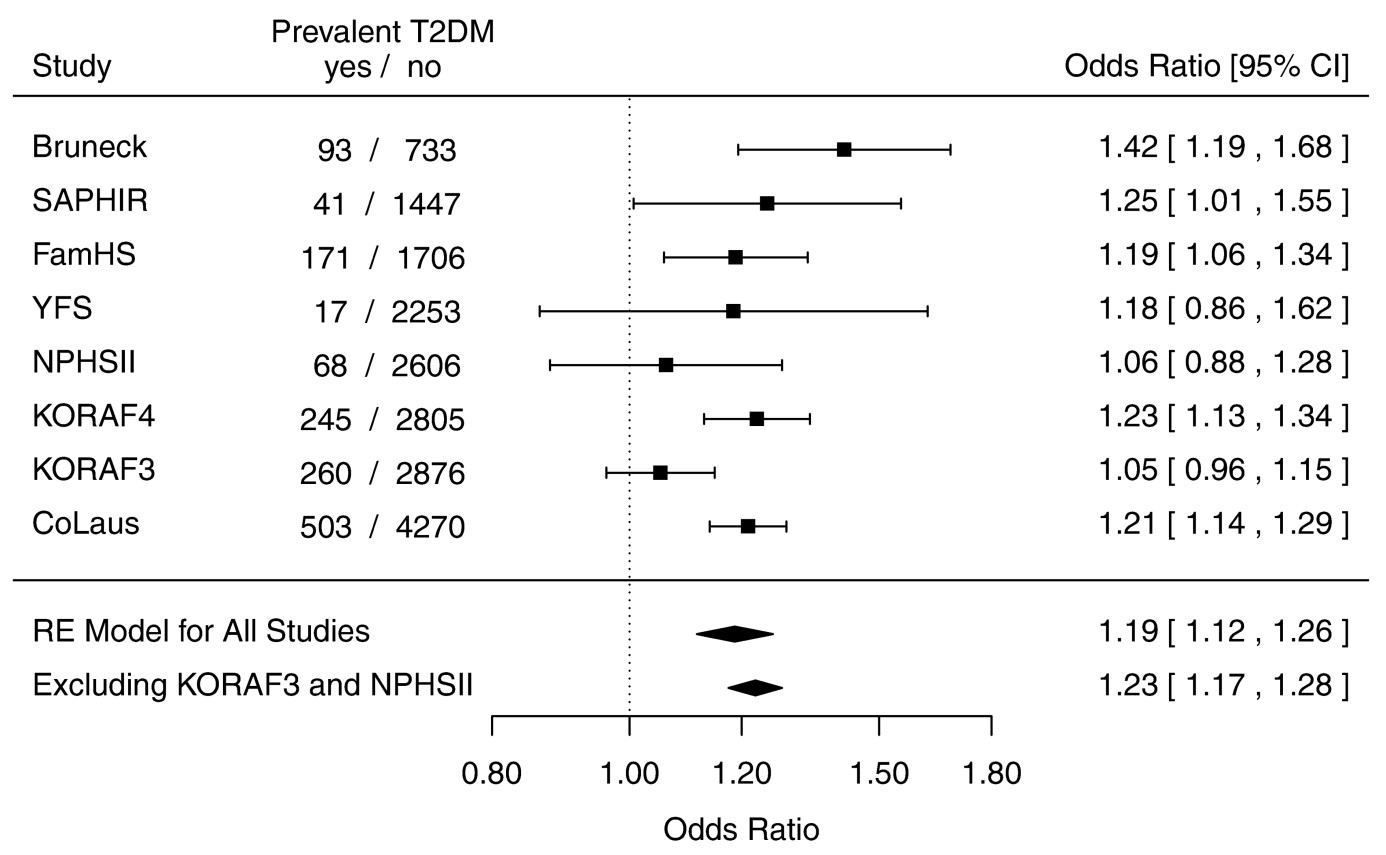
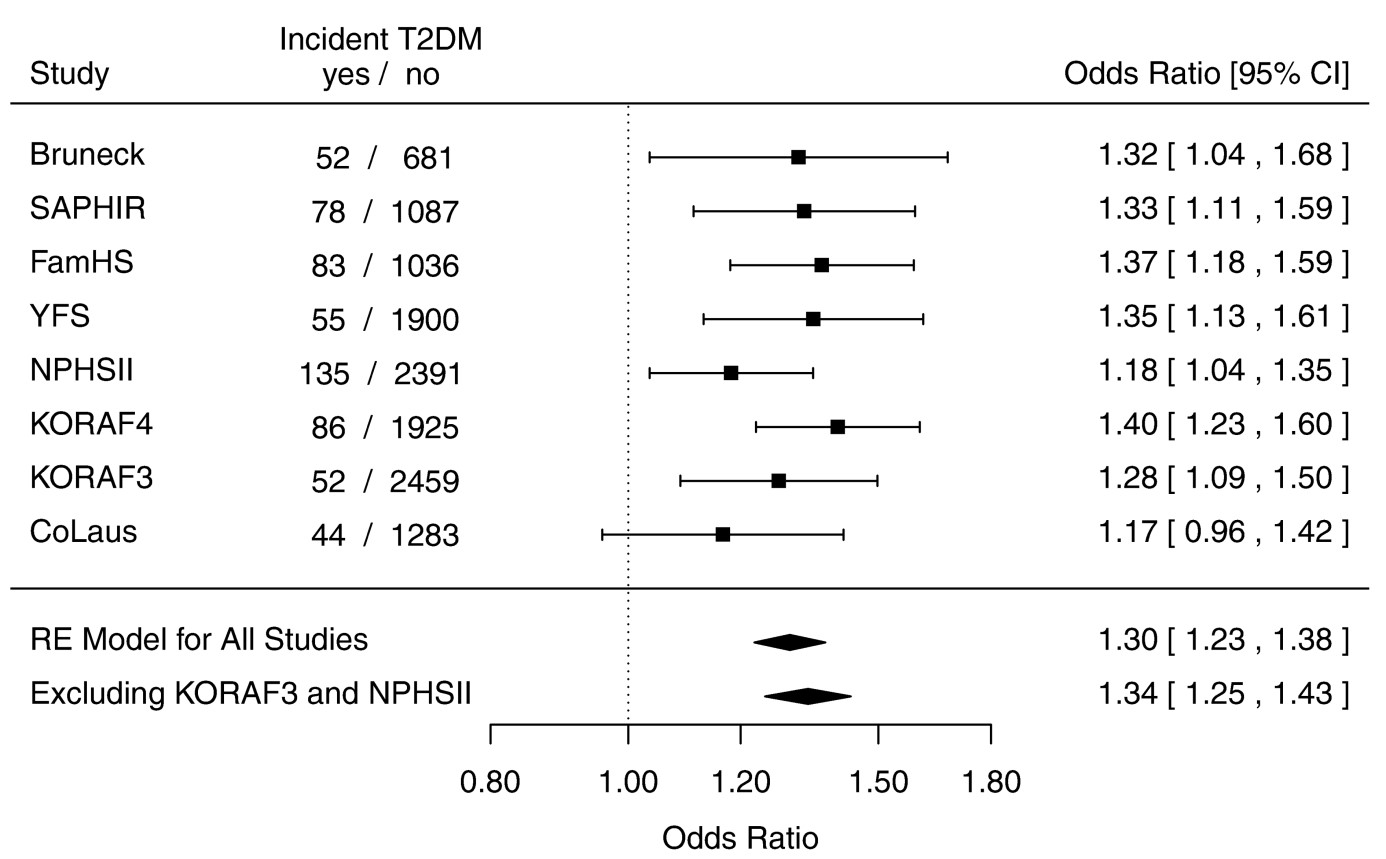
Further studies showed a pronounced association with non-alcoholic fatty liver disease and increased hepatic fat content.
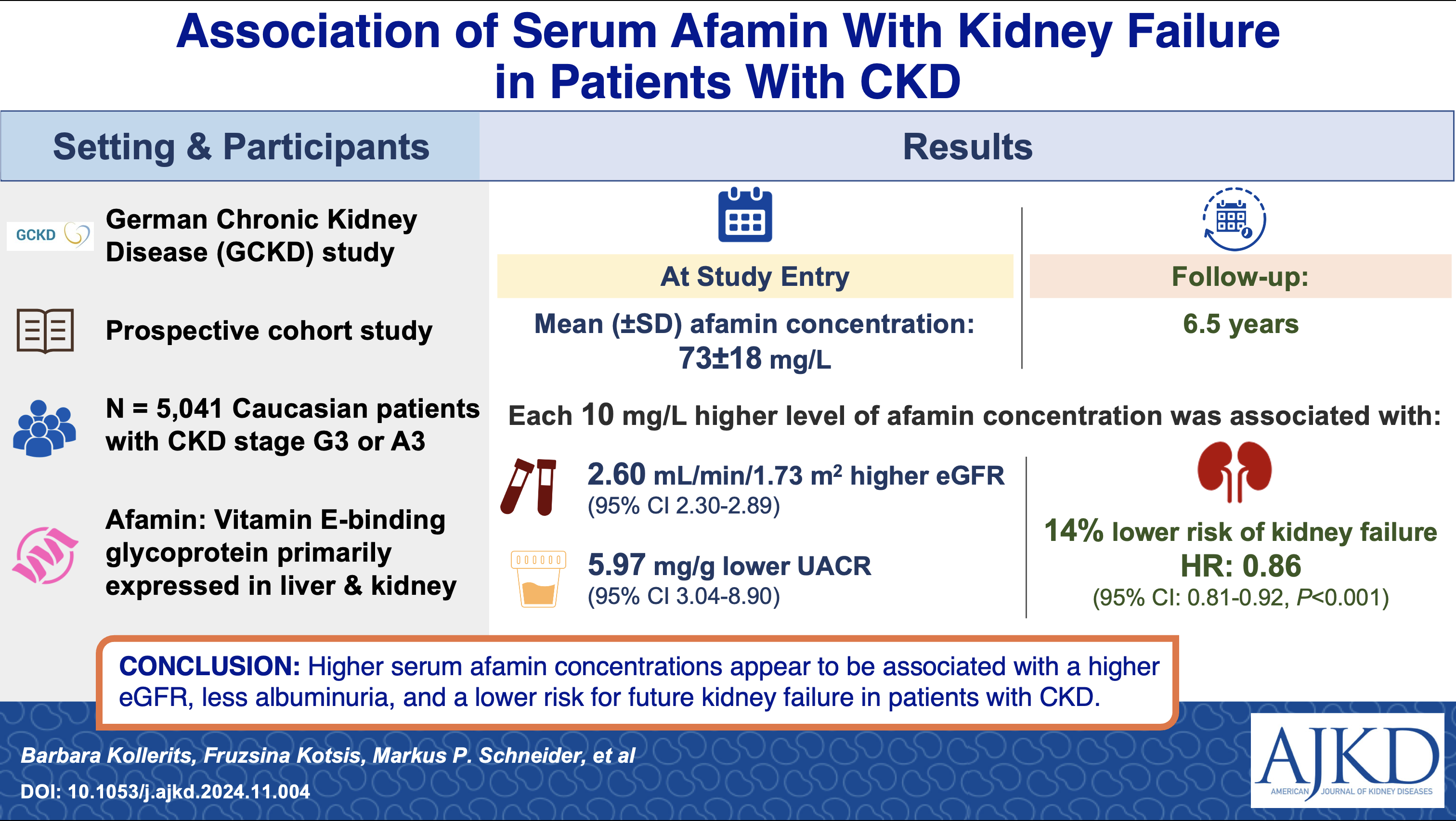
Association of serum afamin concentrations with kidney failure in chronic kidney disease patients: findings from the prospective GCKD cohort study
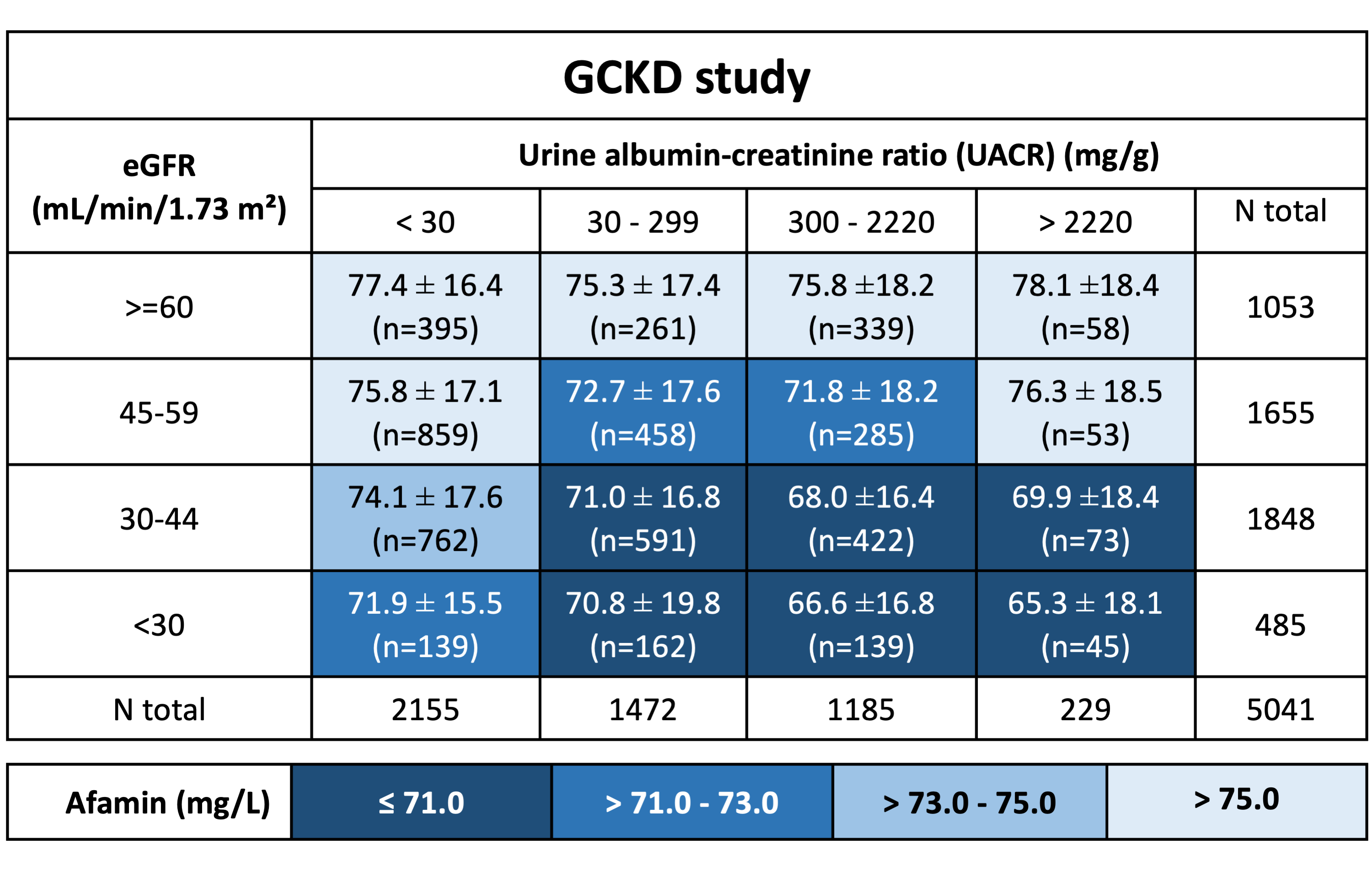
In the first prospective study in more than 5,000 patients with CKD (GCKD study), we found a highly significant association between serum afamin concentrations with parameters of kidney function and a lower risk of future kidney failure. Thus, afamin might reflect aspects of kidney function other than changes in the filtration barrier.
Earlier studies on Afamin by Hans Dieplinger and colleagues
These studies employed cell culture, animal model, biochemical-functional and clinical-epidemiological approaches to examine afamin’s possible function in fertility, neuroprotection, cancer and cardiovascular diseases.
Cooperations
GCKD study, KORA Study Group, SAPHIR Study, Bruneck Study, NHLBI Family Heart Study, CoLaus Study, Second Northwick Park Heart Study, Cardiovascular Risk in Young Finns Study
Earlier Team Members
Lidija Jerkovic, Andreas Vögele, Andreas Melmer, Benjamin Dieplinger, Andreas Naschberger, Allessandra Tramontana
Publications
Kollerits B, Kotsis F, Schneider MP, Schultheiss UT, Weissensteiner H, Schönherr S, Forer L, Meiselbach H, Wanner C, Eckardt KU, Dieplinger H, Kronenberg F, GCKD Investigators: Association of serum afamin concentrations with kidney failure in patients with CKD: Findings from the German CKD cohort study. Am. J. Kidney Dis. 85:432-441.e1, 2025. PMID: 39743167 Journal Article
Kronenberg F, Kollerits B, Kiechl S, Lamina C, Kedenko L, Meisinger C, Willeit J, Huth C, Wietzorrek G, Altmann ME, Thorand B, Melmer A, Dähnhardt D, Santer P, Rathmann W, Paulweber B, Koenig W, Peters A, Adham IM, Dieplinger H: Plasma concentrations of afamin are associated with the prevalence and development of metabolic syndrome. Circ. Cardiovasc. Genet. 7:822-829, 2014. PMID: 25176938 Journal Article
Kollerits B, Lamina C, Huth C, Marques-Vidal P, Kiechl S, Seppälä I, Cooper J, Hunt SC, Meisinger C, Herder C, Kedenko L, Willeit J, Thorand B, Dähnhardt D, Stöckl D, Willeit K, Roden M, Rathmann W, Paulweber B, Peters A, Kähönen M, Lehtimäki T, Raitakari OT, Humphries SE, Vollenweider P, Dieplinger H, Kronenberg F: Plasma concentrations of afamin are associated with prevalent and incident type 2 diabetes: A pooled analysis in more than 20,000 individuals. Diabetes Care 40:1386-1393, 2017. PMID: 28877915 Journal Article
Pitkänen N, Finkenstedt A, Lamina C, Juonala M, Kähönen M, Mäkelä KM, Dieplinger B, Viveiros A, Melmer A, Leitner I, Kedenko L, Seppälä I, Viikari JSA, Mueller T, Kronenberg F, Paulweber B, Lehtimäki T, Zoller H, Raitakari OT, Dieplinger H: Afamin predicts the prevalence and incidence of nonalcoholic fatty liver disease. Clin. Chem. Lab. Med. 60:243-251, 2022. PMID: 34850615 Journal Article
Kurdiova T, Balaz M, Kovanicova Z, Zemkova E, Kuzma M, Belan V, Payer J, Gasperikova D, Dieplinger H, Ukropcova B, Ukropec J: Serum afamin a novel marker of increased hepatic lipid content. Front. Endocrinol. (Lausanne) 12:670425, 2021. PMID: 34603196 Journal Article
Köninger A, Iannaccone A, Hajder E, Frank M, Schmidt B, Schleussner E, Kimmig R, Gellhaus A, Dieplinger H: Afamin predicts gestational diabetes in polycystic ovary syndrome patients preconceptionally. Endocr. Connect. 8:616-624, 2019. PMID: 30991357 Journal Article
Köninger A, Enekwe A, Mach P, Andrikos D, Schmidt B, Frank M, Birdir C, Kimmig R, Gellhaus A, Dieplinger H: Afamin: an early predictor of preeclampsia. Arch. Gynecol. Obstet. 298:1009-1016, 2018. PMID: 30220025 Journal Article
Köninger A, Mathan A, Mach P, Frank M, Schmidt B, Schleussner E, Kimmig R, Gellhaus A, Dieplinger H: Is Afamin a novel biomarker for gestational diabetes mellitus? A pilot study. Reprod. Biol. Endocrinol. 16:30, 2018. PMID: 29587878 Journal Article
Altamirano A, Naschberger A, Fürnrohr BG, Saldova R, Struwe WB, Jennings PM, Millán Martín S, Malic S, Plangger I, Lechner S, Pisano R, Peretti N, Linke B, Aguiar MM, Fresser F, Ritsch A, Lenac Rovis T, Goode C, Rudd PM, Scheffzek K, Rupp B, Dieplinger H: Expression, purification, and biochemical characterization of human afamin. J. Proteome Res. 17:1269-1277, 2018. PMID: 29441788 Journal Article
Tramontana A, Pablik E, Stangl G, Hartmann B, Dieplinger H, Hafner E: Combination of first trimester serum afamin levels and three-dimensional placental bed vascularization as a possible screening method to detect women at-risk for adverse pregnancy complications like pre-eclampsia and gestational diabetes mellitus in low-risk pregnancies. Placenta 62:Sep.15, 2018. PMID: 29405972 Journal Article
Tramontana A, Dieplinger B, Stangl G, Hafner E, Dieplinger H: First trimester serum afamin concentrations are associated with the development of pre-eclampsia and gestational diabetes mellitus in pregnant women. Clin. Chim. Acta 476:160-166, 2018. PMID: 29191735 Journal Article
Naschberger A, Orry A, Lechner S, Bowler MW, Nurizzo D, Novokmet M, Keller MA, Oemer G, Seppi D, Haslbeck M, Pansi K, Dieplinger H, Rupp B: Structural evidence for a role of the multi-functional human glycoprotein afamin in Wnt transport. Structure 25:1907-1915.e5, 2017. PMID: 29153507 Journal Article
Naschberger A, Fürnrohr BG, Lenac Rovis T, Malic S, Scheffzek K, Dieplinger H, Rupp B: The N14 anti-afamin antibody Fab: a rare VL1 CDR glycosylation, crystallographic re-sequencing, molecular plasticity and conservative versus enthusiastic modelling. Acta Crystallogr. D Struct. Biol. 72:1267-1280, 2016. PMID: 27917827 Journal Article
Dieplinger H, Dieplinger B: Afamin–A pleiotropic glycoprotein involved in various disease states. Clin. Chim. Acta 446:105-110, 2015. PMID: 25892677 Review
Seeber B, Morandell E, Lunger F, Wildt L, Dieplinger H: Afamin serum concentrations are associated with insulin resistance and metabolic syndrome in polycystic ovary syndrome. Reprod. Biol. Endocrinol. 12:88, 2014. PMID: 25208973 Journal Article
Köninger A, Edimiris P, Koch L, Enekwe A, Lamina C, Kasimir-Bauer S, Kimmig R, Dieplinger H: Serum concentrations of afamin are elevated in patients with polycystic ovary syndrome. Endocr. Connect. 3:120-126, 2014. PMID: 24928911 Journal Article
Hubalek M, Buchner H, Mörtl MG, Schlembach D, Huppertz B, Firulovic B, Köhler W, Hafner E, Dieplinger B, Wildt L, Dieplinger H: The vitamin E-binding protein afamin increases in maternal serum during pregnancy. Clin. Chim. Acta 434:41-47, 2014. PMID: 24768783 Journal Article
Dieplinger B, Egger M, Gabriel C, Poelz W, Morandell E, Seeber B, Kronenberg F, Haltmayer M, Mueller T, Dieplinger H: Analytical characterization and clinical evaluation of an enzyme-linked immunosorbent assay for measurement of afamin in human plasma. Clin. Chim. Acta 425:236-241, 2013. PMID: 23981841 Journal Article
Melmer A, Fineder L, Lamina C, Kollerits B, Dieplinger B, Braicu I, Sehouli J, Cadron I, Vergote I, Mahner S, Zeimet AG, Castillo-Tong DC, Ebenbichler CF, Zeillinger R, Dieplinger H: Plasma concentrations of the vitamin E-binding protein afamin are associated with overall and progression-free survival and platinum sensitivity in serous ovarian cancer–a study by the OVCAD consortium. Gynecol. Oncol. 128:38-43, 2013. PMID: 23063758 Journal Article
Seeber BE, Czech T, Buchner H, Barnhart KT, Seger C, Daxenbichler G, Wildt L, Dieplinger H: The vitamin E-binding protein afamin is altered significantly in the peritoneal fluid of women with endometriosis. Fertil. Steril. 94:2923-2926, 2010. PMID: 20858448 Journal Article
Dieplinger H, Ankerst DP, Burges A, Lenhard M, Lingenhel A, Fineder L, Buchner H, Stieber P: Afamin and apolipoprotein A-IV: novel protein markers for ovarian cancer. Cancer Epidemiol. Biomarkers Prev. 18:1127-1133, 2009. PMID: 19336561 Journal Article
Kratzer I, Bernhart E, Wintersperger A, Hammer A, Waltl S, Malle E, Sperk G, Wietzorrek G, Dieplinger H, Sattler W: Afamin is synthesized by cerebrovascular endothelial cells and mediates alpha-tocopherol transport across an in vitro model of the blood-brain barrier. J. Neurochem. 108:707-718, 2009. PMID: 19046407 Journal Article
Jackson D, Craven RA, Hutson RC, Graze I, Lueth P, Tonge RP, Hartley JL, Nickson JA, Rayner SJ, Johnston C, Dieplinger B, Hubalek M, Wilkinson N, Perren TJ, Kehoe S, Hall GD, Daxenbichler G, Dieplinger H, Selby PJ, Banks RE: Proteomic profiling identifies afamin as a potential biomarker for ovarian cancer. Clin. Cancer Res. 13:7370-7379, 2007. PMID: 18094419 Journal Article
Jerkovic L, Voegele AF, Chwatal S, Kronenberg F, Radcliffe CM, Wormald MR, Lobentanz EM, Ezeh B, Eller P, Dejori N, Dieplinger B, Lottspeich F, Sattler W, Uhr M, Mechtler K, Dwek RA, Rudd PM, Baier G, Dieplinger H: Afamin is a novel human vitamin E-binding glycoprotein characterization and in vitro expression. J. Proteome Res. 4:889-899, 2005. PMID: 15952736 Journal Article